In Hollywood, BuzzFeed’s news division has helped the publisher land its first deals with big-name buyers such as Netflix and Hulu. Last week, Hulu announced it had commissioned a documentary from BuzzFeed News based on its extensive reporting of sexual abuse allegations against singer R. Kelly. A few weeks earlier, Netflix ordered a documentary series from BuzzFeed called “Follow This,” which will follow BuzzFeed News reporters on the job. These two streaming shows join a growing slate of longer-form programming for BuzzFeed News.
Each morning we scour the web for fresh useful insights in our Need to Know newsletter. Sign up below.
As part of our fact-checking journalism project, Jane Elizabeth and Poynter’s Alexios Mantzarlis and Daniel Funke highlight stories worth noting related to truth in politics and on the Internet. This week’s round-up includes how fact-checkers are covering politics in authoritarian countries, the “terrible consequences” of research that is really, really wrong, and tips for newsrooms to prepare for the next onslaught of breaking news hoaxes.
Véronique Brossier, a senior software engineer at the New York Times, developed a low-bandwidth mode for the Times’ native iOS app. Brossier was inspired after a trip to Cuba where she was not able to retrieve fresh news using the Times app because her hotel network logged her out every time she attempted to update content, seemingly because the amount of data was too taxing. “My experience in Cuba inspired me to assess the feasibility of our app for the many people who only have a limited data plan and reduced access to broadband, not just on a small Caribbean island, but in the United States, and around the world.”
On Tuesday, the news spread quickly: Russian dissident journalist Arkady Babchenko had been shot in Kiev and died in the ambulance on his way to the hospital. No one had trouble believing this story. It was gruesomely familiar, similar to the many horrifying stories from Russia, Ukraine, and other countries where journalists are killed for their reporting. “In its endless one-upmanship against Russia, Ukraine has once again cut off its nose to spite its face, severely undermining its own credibility and that of journalists,” writes Sophie Pinkham. “Next time a journalist is killed in Ukraine … [we] will likely wonder whether they should believe in a tragic death until they’ve inspected the corpse themselves. Conspiracy theories thrive on this kind of corrosive scepticism.”
“One of the biggest challenges standing in the way of diversity and equal opportunity for people is the way that people build founding teams,” says Katrina Lake, CEO of Stitch Fix. “People tend to bring on my buddy from this thing and then my buddy from that thing, and it’s like, ‘You’re just kind of bringing the same people that you’ve worked with back together, getting the gang together again to found another company.’ That just creates this circle of capital raising that I think is not healthy, and I don’t think people are looking at the whole world and saying, ‘Who are the best people for these jobs?’”
The role of a reporter is shifting, as are the economics of education. With this new calculus, does journalism school still have a place in our profession? CJR presents three competing arguments. Bill Grueskin says yes, we need journalism schools more than ever. Felix Salmon says no, they should not exist. And Alexandria Neason says maybe, but not when it requires students to take on huge debts.
“Before I got sober, I often joked that I became a journalist because it’s one of the few professions where drinking on the job isn’t just allowed, but practically required. Now I’m pretty sure that wasn’t a joke,” writes Ana Marie Cox. “Reading my coverage now, I can’t tell if I was genuinely excited about the [events I covered] or parodying others’ excitement or just playing along with the conceit that there was any reason to be there at all. During the years I covered Washington as a quasi-pundit media gadfly … I believed going to parties was part of my job. It would be more accurate to say I made going to them my job; I turned them into content, at least.”
+“Elon Musk should know better:”In 1996 Musk, with his younger brother, was one of the founders of the website Zip2, a hybrid business directory and mapping service, which was sold to newspaper publishers as a software package to bring print classifieds, real-estate listings, and auto deals online at the turn of the century. Its slogan was, “We Power the Press.” (The Atlantic)
Each morning we scour the web for fresh useful insights in our Need to Know newsletter. Sign up below.
Fact-checking is always hard. In some countries, though, it’s potentially dangerous: Journalists not only risk losing their right to publish, they may risk imprisonment. So how are fact-checkers covering politics in authoritarian countries? Writing for Poynter, Daniel Funke examines veteran projects in Iran, Turkey and Zimbabwe – and the prospects for fact-checking in even more restrictive countries like China and Russia.
Research you can use
A Berkeley professor who studies how political information spreads across Twitter recently became a victim of political information that spread across Twitter.
What’s your favorite fake news? A University of Zurich scholar — whostudied fake news in the U.S., U.K., Austria and Germany — says it all depends where you live.
This is how we do it
In France, Libération’s Désintox is now CheckNews — an on-demand fact-checking platform aimed at giving readers answers to questions immediately. The project has migrated back to Libé’s main site.
Want to brush up on your fact-checking skills? Register for this free, one-hour Poynter webinar on the best tools for verifying information online.
Here are some tips for newsrooms to prepare for the next onslaught of breaking news hoaxes.
This is bad
The Committee to Protect Journalists has counted the number of journalists jailed on fake news-related charges in 2017.
Meet the Indonesian artist who’s “fooling the world” with his fake photos.
This is fun
A viral post about Coachella was actually written by a 28-year-old man — not a woman named Kaycie Allen.
Fact-checking Hollywood: The Verge looks at the Netflix documentary “Mercury 13.”
Keep your fake news radar up-to-date: Try the latest fake news quiz from this Utah radio station.
A closer look
The power of the crowd: Crowdsourcing does has some value for fact-checking but it still can’t scale. Full Fact’s Mevan Babakar takes a look at the pros and cons.
GQ Magazine explains in detail how a viral conspiracy theory can so easily be created out of, well, nothing.
If you read one more thing
So about that credibility score Elon Musk suggested on Twitter… Alexios wrote a measured examination of four important questions it raises.
Quick fact-checking links
Papua New Guinea is threatening to block Facebook for a month while it weeds out fake users and studies the effects of misinformation.
This review of Showtime’s new “Fourth Estate” says the series is an antidote to misinformation.
A Trump cabinet member says she’s never heard the president mangle the truth and suggests the media “are blowing things out of proportion.”
Does Facebook really care about fake news in India? Nope, says HuffPost.
The Crime Report from John Jay College’s criminal justice program is doing some fact-checking. This week they tackle the “missing” migrant children story.

 Its quirks baffle, and its capabilities surprise.
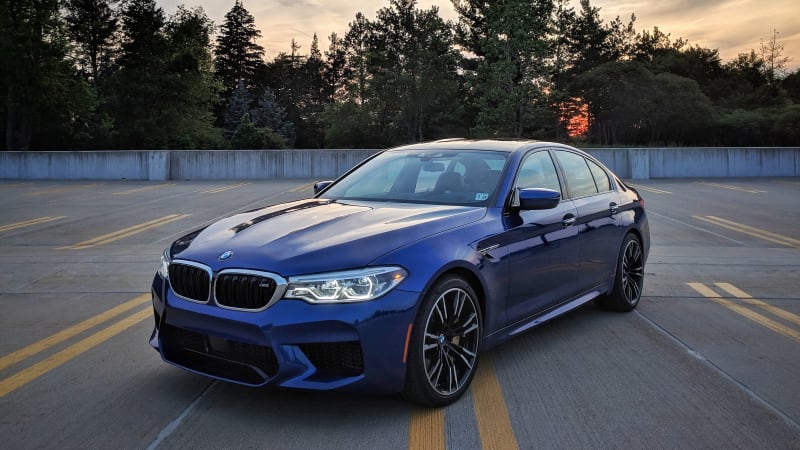 All-wheel or rear-wheel drive. It's up to you.
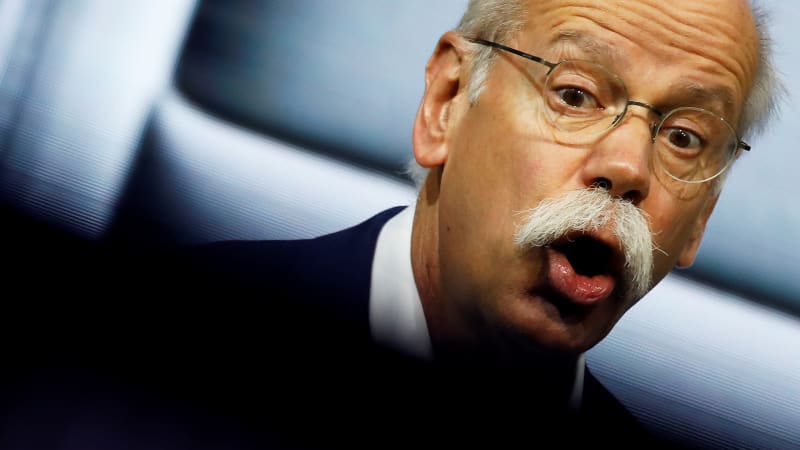 750,000 Mercedes vehicles could be affected.
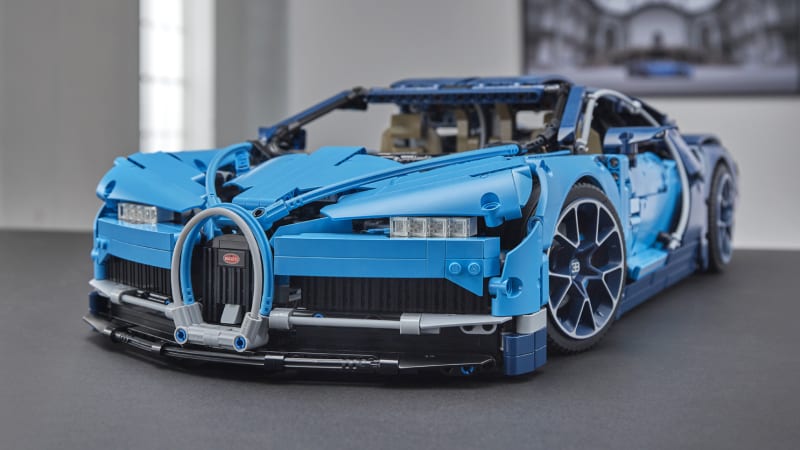 It has a W16 engine and functioning 8-speed transmission.
 Look for electrification across all models in the next few years.
 Ferrari will supply all future powertrains, electrified and conventional.
 FCA revealed this and more at its latest five-year plan.
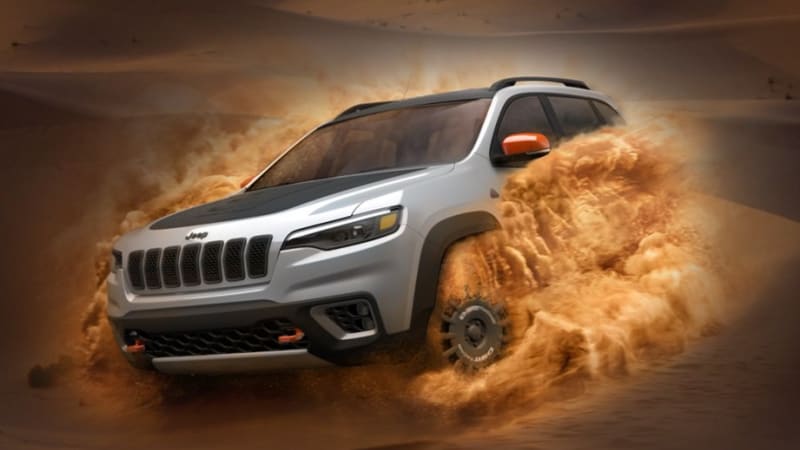 All this and more from FCA's next five-year plan.