Search Google

10/29/20

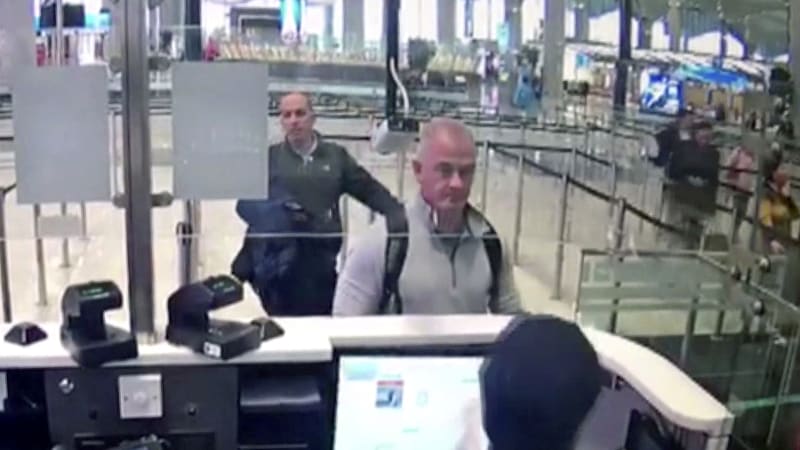
US approves extradition of Americans accused of arranging Carlos Ghosn's escape

Chevy K5 Blazer-E project lead gives us more details on the electric Connect and Cruise eCrate

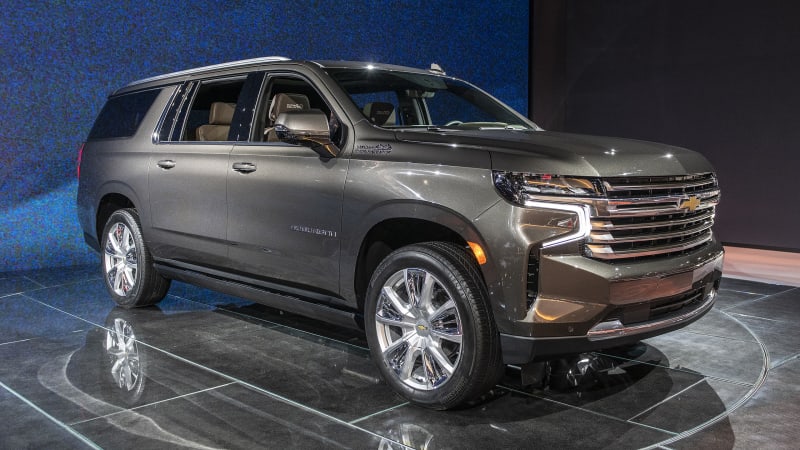
GM VP alludes to a new Chevy Suburban HD

Filed under: ,,,

Continue reading GM VP alludes to a new Chevy Suburban HD

GM VP alludes to a new Chevy Suburban HD originally appeared on Autoblog on Thu, 29 Oct 2020 14:03:00 EDT. Please see our terms for use of feeds.

Permalink |  Email this |  Comments

from Autoblog https://ift.tt/31UpmX3

Autoblog is Live: Playing Rocket League

Filed under: ,

We're playing F1 2019 today.

Continue reading Autoblog is Live: Playing Rocket League

Autoblog is Live: Playing Rocket League originally appeared on Autoblog on Thu, 29 Oct 2020 13:50:00 EDT. Please see our terms for use of feeds.

Permalink |  Email this |  Comments

from Autoblog https://ift.tt/3jEGfLo

Two never-titled 2001 and 2002 Mercedes-Benz SL roadsters for sale

Spy photos show Porsche 911 Turbo ducktail prototype at the 'ring

Watch a self-driving Roborace car drive directly into a wall

Filed under: ,,,,,

It's clear robotic racing has some bugs to sort out as a Roborace participant's AI car drove directly into a wall.

Continue reading Watch a self-driving Roborace car drive directly into a wall

Watch a self-driving Roborace car drive directly into a wall originally appeared on Autoblog on Thu, 29 Oct 2020 11:45:00 EDT. Please see our terms for use of feeds.

Permalink |  Email this |  Comments

from Autoblog https://ift.tt/31SIIf3

Electrified car registrations overtake diesel in Europe for the first time

Need to Know: October 29, 2020

OFF THE TOP

You might have heard: No more than half of U.S. adults have confidence in journalists to act in the best interests of the public (Pew Research Center) 

But did you know: Another study finds that Americans blame unfair news coverage on media outlets, not the journalists who work for them (Pew Research Center)

A stunning 8-in-ten Americans (79%) say news organizations tend to favor one side when reporting on social and political issues, with even 69% of Democrats — who are much less likely than Republicans to complain that news coverage is unfair — saying news outlets lean to one side. However, a Pew Research Center survey shows that roughly eight-in-ten (83%) of Americans blame news outlets as a whole, rather than individual journalists. Just 16% say the journalists are to blame for unfair coverage. The most common reason cited for unfair coverage was that news organizations have a political agenda; however, 20% of respondents (making up both Democrats and Republicans) cited financial interests as the reason.

+ Noted: City Pages is closing, ending the era of alternative weeklies in the Twin Cities (Minneapolis Star Tribune); Applications are now open for Poynter’s 2021 Leadership Academy for Women in Media — which, at this point, is scheduled to happen in person in St. Petersburg, Fla. (Poynter)

API RESOURCES

Local news sustainability: API advisers highlight three paths forward                    

Thanks to a 2017-19 grant from the Knight Foundation, API has sent advisers into 23 U.S.-based newsrooms to support their efforts to reach or maintain long-term sustainability. We’ve highlighted three outlets — a large metro daily, a hyperlocal community newspaper and a digital startup — whose challenges are typical of many media organizations. The steps they’ve taken toward sustainability include creating a newsletter aimed at driving digital subscriptions, reaching new audiences through social media, and introducing key listening and engagement strategies into their work.

TRY THIS AT HOME

How Bloomberg is breaking down barriers between its ads and subscribers businesses (Digiday)

Bloomberg’s ad team has started using an in-house A/B testing tool used by the subscriptions team to optimize its products and campaigns. Meanwhile, the subscriptions team is using the ad team’s data on audience segments to market to potential subscribers. The data-swapping follows a reorganization of the company that brings the two departments under chief product officer and global head of digital Julia Beizer. The ad team had previously operated out of Bloomberg’s sales group. Bringing subscriptions and advertising together is going to become more common among publishers, writes Max Willens, as they continue diversifying revenue and learn to evaluate things like the lifetime value of a digital subscription.

+ How the Chattanooga Times Free Press explains to readers why we may not know results on election night and where it gets information on vote tallies (Chattanooga Times Free Press); Milwaukee Journal Sentinel Editor George Stanley explains “what we do to ensure our election coverage is fair, accurate, honest and thorough” (Milwaukee Journal Sentinel)

OFFSHORE

News organizations around the world planning to downsize office space (Reuters Institute)

A new report from the Reuters Institute found that nearly half — 48% — of newsroom leaders from around the world say their companies are planning to downsize their physical premises. An accelerated shift to hybrid newsrooms — with some staff in the office, some working from home, and some on the go — is likely to be a lasting legacy of the coronavirus crisis, authors write. Over half of respondents — 58% — seemed open to the shift, saying they’d like to go back to the office a bit less often than before the pandemic, and 21% said they’d like to go back much less often. One quarter said they’d like to go back as often as before.

OFFBEAT

An examination of the ‘sleeping giant’ metaphor shows how voting patterns are linked to information needs (Texas Monthly)

In in-depth conversations with Latino voters and nonvoters across Texas, researchers found that voting behavior is related to the news and information they consume. Many nonvoters said they felt they had little agency over their own lives — that financial stress and hardship left them little time to suss out how politicians and their policies impacted them. One man, who said he frequently consumes news via CNN and The New York Times, told researchers that he wasn’t sure how his vote would change the challenges he’s experienced around education and healthcare. “I would love to see why our vote matters,” he said. “I want to see a presentation — I want to sit down and I want them to convince me, why is it great to vote?”

UP FOR DEBATE

New York Times’ handling of ‘Anonymous’ Trump op-ed in question (Poynter)

The big reveal yesterday of the author of the 2018 op-ed entitled “I Am Part of the Resistance Inside the Trump Administration” is calling into doubt The New York Times’ decision to describe the author as a “senior official.” The author, Mike Taylor, is a former chief of staff at the Department of Homeland Security. Brookings fellow Susan Hennessy wrote, “The mere fact that the majority of people clearly came away with the perception that the author was dramatically more senior than he was in reality means that the Times failed to provide its readership sufficient context.” Axios’ Jonathan Swan added, “It’s an embarrassment.”

+ Backlash after Trump endorsement prompts changes to The Spokesman-Review’s opinion pages, including “no more unsigned editorials and no more endorsements,” and more local voices on local issues (The Spokesman-Review)

SHAREABLE

How news outlets become misinformation superspreaders (Journalist’s Resource)

News reports often depict social media and far-right news outlets as the primary sources of domestic misinformation — and they are, indeed, misinformation hotbeds. However, writes Thomas E. Patterson, there is a major source of misinformation that’s rarely mentioned in news stories — the news media themselves. Research has shown that mainstream news outlets, by dint of reporting on misinformation, play a larger role in propagating it than even coordinated foreign efforts like that of the Russians in 2016. The justification that “it’s newsworthy” ignores the damage that is done by the spread, argues Patterson — something that fact-checks can’t come close to recalling.

The post Need to Know: October 29, 2020 appeared first on American Press Institute.


from American Press Institute https://ift.tt/3kGzKc2

Factually: Turning human error into election ‘fraud’

Humans make mistakes, and this year’s election – run by humans – will bring plenty of them. Poll workers are managing the vote during a pandemic. Laws are changing, sometimes late in the game because of court rulings. A greater number of people are voting by mail.

And with the inevitable mistakes comes a whole new category of misinformation: One that takes these human errors and contorts them into an intentionally “rigged” election.

One of the more prominent examples occurred in Pennsylvania last month when an independent contractor mistakenly discarded nine military ballots. The secretary of state said it was not intentional fraud. But it wasn’t long before President Donald Trump’s team turned this human error into an effort to steal the election. His Justice Department launched an investigation into the incident.

In a Michigan case that state officials called human error, 400 ballots intended for military personnel included the wrong name where Vice President Mike Pence’s should have been. The problem was fixed and voters got the right ballot. But Trump tweeted that it was done “illegally and on purpose.”

In California, a printing error meant 2,100 voters mistakenly received mail-in ballots that didn’t have the presidential slates. Trump tweeted about the incident, using it as a basis for saying “this will be the most corrupt Election in American History!” Voters ultimately were sent the right ballots.

Ascribing the worst possible motives to local election officials who are just trying to do their jobs in a difficult year seems like an especially cynical falsehood to spread. But local officials, of course, aren’t the real targets of this disinformation campaign. It’s aimed at the voters themselves, to undermine their confidence in the integrity of the election system, and it has become a regular feature of Trump’s campaign strategy.

The human errors that come with an already stressed election will continue for the next five days and beyond. Fact-checkers can and have debunked individual “fraud” claims, but the larger intent is to plant seeds of doubt across the landscape. And, as FactCheck.org’s Lori Robertson pointed out in a recent piece summing up Trump’s false claims, they are usually aimed at swing states.

– Susan Benkelman, API

. . . technology

  • The CEOs of Facebook, Google and Twitter faced a barrage of questions from lawmakers yesterday at a hearing aimed at figuring out what to do with a 1996 law that shields the platforms from legal liability for content posted by third-party users.
    • Democrats said the companies haven’t been aggressive enough in policing their content, while Republicans say the law has allowed the platforms to stifle speech. The New York Times and The Washington Post live-blogged the proceedings. People who missed it can watch here.
  • Facebook demanded that New York University researchers stop using a browser plug-in that tracks micro-targeted political ads, claiming it violates the company’s terms of service, Politico reported.
    • Researchers have been using the plug-in to study the different ways political advertisers have crafted their micro-targeted messaging.
    • Facebook set a deadline of Nov. 30 for the researchers to stop using it. The researchers told Politico they don’t plan to comply.

. . . politics

  • A false campaign against Hunter Biden shows how claims that might have only lived on fringe sites can now be found in mainstream conservative media, NBC’s Ben Collins and Brandy Zadrozny reported.
    • “The disinformation campaign appears to have been successful in its goal of generating a smear against the former vice president’s son,” they wrote.
  • Harvard Kennedy School professor Thomas E. Patterson, writing in Journalist’s Resource, addressed the question of how America’s news outlets had become prime sources of misinformation, and what they can do about it.
    • Among his conclusions: “There’s no evidence to support the notion that news outlets’ fact-checking puts an appreciable dent in our misinformation problem. The misinformed rarely fact check their beliefs and, when they do, are seldom persuaded that they’re wrong.”

. . . science and health

  • The BBC’s Marianna Spring has interviewed a man who tells the story of how his mother has built a big following online spreading conspiracy theories on the coronavirus, including that COVID-19 doesn’t exist and that it’s spread by 5G radio waves.
    • Sebastian Shemirani told Spring he thinks his mother’s beliefs have ruined their relationship and said it’s important to “nip it in the bud” when someone says they’re starting to believe conspiracy theories.
  • Podcaster Joe Rogan is letting conspiracy theory promoter Alex Jones spread misinformation, including falsehoods about vaccines and the effectiveness of masks in halting the spread of COVID-19, Ashley Carman reported in The Verge.
    • “Although Rogan attempts to fact-check Jones live by asking for his sources and then attempting to search and pull up links during the recording, it doesn’t take away from the fact that he is giving Jones a place to share his views,” Carman wrote.
    • At Spotify, which is reportedly paying Rogan $100 million for exclusive streaming rights, an executive defended the arrangement in a private email, BuzzFeed’s Jane Lytvynenko wrote this week.

This week’s fact-check tackles a claim on Instagram from Tampa Bay Buccaneers quarterback Tom Brady that there have been more deaths from suicide than COVID-19 in the past two months. We’ve seen variations of this claim before in GermanyColombiaNorthern Ireland, the Republic of Ireland, and even previously in the United States.

COVID-19 has caused immense disruption in our lives, so this claim feels plausible. PolitiFact’s Jon Greenberg spoke to experts and used the latest available data to show that the average number of suicides per month in the United States pales in comparison to the number of people dying from COVID-19.

In 2018, the year for which we have the most complete data, the U.S. averaged 4,026 suicides a month. The average deaths per month from COVID-19 has been many times larger than that, and suicide researcher Dr. Jonathan Singer told Greenberg there’s no way the rate of suicides could have jumped that much.

What we liked: As noted above, this is a claim that feels true, but isn’t. It reminds us of how our emotional response to information impacts our willingness to believe it. This is also a claim that has spread globally, so this fact-check plays an important role in building a reservoir of debunks other fact-checkers can use to fight similar claims.

– Harrison Mantas, IFCN

  1. IFCN Associate Director Cristina Tardáguila spoke to NPR’s Michel Martin about FactChat, the bilingual WhatsApp chatbot designed to help both English and Spanish speakers fight election misinformation.
  2. Poynter-owned MediaWise, in collaboration with The Technology and Social Change Project, released its “Democracy and Dragons” webcomic to help voters fight misinformation this election season.
  3. The New York Times put together a snazzy video about how disinformation affecting Americans voters is homegrown this year, as opposed to the 2016 campaigns of Russian trolls.
  4. Right-wing hoaxers Jacob Wohl and Jack Burkman were indicted in Ohio in connection with a voter suppression scheme involving robocalls.
  5. QAnon remains a primary source of disinformation despite efforts by Silicon Valley to rein it in, wrote The Washington Post’s Craig Timberg and Isaac Stanley-Becker.

Thanks for reading. Feel free to send feedback to factually@poynter.org. And send us your favorite fact checks! We’d love to hear from you.

Susan and Harrison

The post Factually: Turning human error into election ‘fraud’ appeared first on American Press Institute.


from American Press Institute https://ift.tt/3kDJ9RS

Search Google

Blog Archive